
Introduction
Artificial intelligence is rapidly transforming how businesses operate, compete, and innovate. From automating repetitive tasks to enabling predictive decision making, AI technologies are becoming a core part of modern digital strategies. Organizations across industries are exploring ways to integrate artificial intelligence into their operations, products, and customer experiences.
Despite the growing interest in AI adoption, many businesses struggle to implement it effectively. Challenges such as selecting the right technologies, preparing data infrastructure, integrating AI systems with existing platforms, and ensuring long term scalability can make implementation difficult.
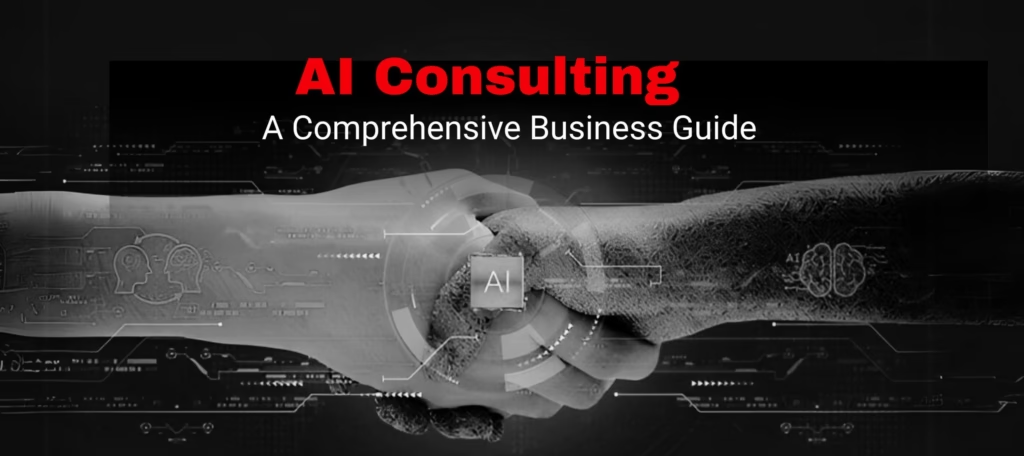
This is where AI consulting services play a crucial role. AI consultants help organizations identify the most valuable use cases, design practical AI strategies, and implement solutions that deliver measurable business outcomes.
In this guide, we explore what AI consulting services are, why businesses need them, and how organizations can successfully adopt artificial intelligence through expert consulting and implementation.
Artificial Intelligence (AI) is no longer a buzzword—it’s a business reality. From automating mundane tasks to generating insights that drive growth, AI is transforming how companies operate across industries. But for most businesses, the real challenge isn’t accessing AI tools—it’s knowing how to use them strategically.
That’s where AI consulting services come in.
Whether you’re a startup aiming to improve customer engagement or an enterprise looking to optimize operations, AI consultants help turn your data and ideas into actionable results.
What Are AI Consulting Services
AI consulting services help businesses adopt artificial intelligence technologies to improve operations, decision making, and customer experiences. These services combine technical expertise with strategic business insight to design and implement AI driven solutions.
An AI consulting partner typically works with organizations to evaluate their current technology environment, identify opportunities for AI adoption, and develop a roadmap for implementation.
AI consulting services commonly include:
- AI strategy development
- Data readiness assessment
- AI solution design
- Machine learning model development
- AI system integration
- Automation strategy
- Performance monitoring and optimization
The goal of AI consulting is not simply to introduce new technologies but to ensure that AI solutions deliver real business value.
Why Businesses Need AI Consulting
Many organizations recognize the potential of artificial intelligence but lack the expertise required to implement it successfully. AI projects often involve complex data systems, advanced algorithms, and specialized technical knowledge.
AI consulting services help organizations overcome these challenges and accelerate successful adoption.
Key reasons businesses seek AI consulting include:
- Lack of in house AI expertise
Many companies do not have internal teams experienced in machine learning, data science, or AI architecture. Consulting experts provide the necessary knowledge to guide implementation. - Complex technology selection
There are many AI frameworks, tools, and platforms available. Consultants help businesses select the right technologies for their specific needs. - Data preparation challenges
AI systems rely on high quality data. Consultants assist organizations in preparing, cleaning, and structuring their data for AI models. - Faster implementation
AI consulting partners help businesses avoid costly trial and error by applying proven methodologies and best practices. - Scalable AI strategy
Consultants design AI systems that can grow with the organization and support long term innovation.
Recent research from policy institutions also highlights how artificial intelligence and advanced technologies are transforming the global services sector. According to the NITI Aayog report on technology services reimagination, emerging technologies such as artificial intelligence, automation, and data analytics are expected to significantly reshape business operations and digital service delivery in the coming years.
Common AI Use Cases for Businesses
Artificial intelligence can be applied across a wide range of business functions. Organizations adopt AI to improve efficiency, enhance customer experiences, and gain strategic insights.
Some of the most common AI applications include
- Customer support automation
AI powered chatbots and virtual assistants help businesses handle customer inquiries efficiently. - Predictive analytics
AI models analyze historical data to forecast future trends, customer behavior, and market demand. - Fraud detection
Financial institutions use AI to identify suspicious transactions and prevent fraud. - Supply chain optimization
AI systems analyze logistics data to improve inventory management and delivery efficiency. - Personalized marketing
AI enables businesses to deliver highly targeted marketing campaigns based on customer preferences. - Operational automation
AI automation reduces manual work and improves productivity across business operations.
The AI Consulting Process
Successful AI implementation requires a structured approach. AI consulting services typically follow a step by step process to ensure effective adoption.
Business and Technology Assessment
Consultants evaluate the organization’s existing systems, data infrastructure, and business objectives to identify potential AI opportunities.AI Strategy Development
A strategic roadmap is developed to align AI initiatives with business goals. This includes selecting the right technologies and defining measurable outcomes.Data Preparation
Data is collected, cleaned, and structured to support machine learning models and analytics systems.Model Development and Testing
Machine learning models are developed and tested using relevant datasets to ensure accuracy and reliability.AI System Integration
The AI solution is integrated with existing business systems such as enterprise software platforms, databases, and customer applications.Monitoring and Optimization
After deployment, AI systems are continuously monitored and optimized to improve performance and adapt to changing business needs.
Challenges in AI Adoption
While artificial intelligence offers significant advantages, businesses must address several challenges during implementation.
- Data quality issues
AI systems require clean, structured, and reliable data. Poor data quality can affect model accuracy. - Integration complexity
Integrating AI with existing enterprise systems can be technically challenging. - Skill shortages
Qualified AI professionals are in high demand, making it difficult for many organizations to build internal teams. - Cost considerations
AI development and infrastructure investment can be significant if not properly planned.
AI consulting services help businesses overcome these challenges by providing strategic guidance and technical expertise.
The rapid growth of artificial intelligence adoption is also being supported by national level initiatives and policy discussions. Events such as the India AI Impact Summit 2026 highlight how governments, technology companies, and research institutions are collaborating to accelerate AI innovation across industries.
How AI Consulting Creates Business Value
Organizations that successfully adopt artificial intelligence gain several competitive advantages.
- Improved operational efficiency
Automation reduces manual workloads and improves productivity. - Better decision making
AI powered analytics help leaders make data driven decisions. - Enhanced customer experiences
AI enables personalized services and faster customer support. - New product innovation
Companies can develop new digital products and services powered by AI technologies. - Competitive advantage
Businesses that adopt AI early often gain a significant advantage in their markets.
Choosing the Right AI Consulting Partner
Selecting the right consulting partner is essential for successful AI implementation. Businesses should evaluate potential partners based on several factors.
- Technical expertise
Consultants should have strong experience in AI development, machine learning, and data engineering. - Industry understanding
A good consulting partner understands the business challenges specific to your industry. - Implementation experience
Successful case studies and real world project experience demonstrate practical expertise. - Scalable solutions
The consulting partner should design AI systems that support long term growth. - Strategic approach
AI consulting should align with business goals rather than focusing only on technology.
How Bugle Technologies Helps Businesses Implement AI
Bugle Technologies provides end to end AI consulting and development services that help organizations unlock the full potential of artificial intelligence.
Our AI capabilities include:
- AI consulting and strategy development
- AI agent development
- AI chatbot solutions
- Large language model integration
- Predictive analytics and machine learning solutions
- AI powered automation systems
Our team works closely with organizations to design practical AI solutions that improve efficiency, enhance decision making, and support digital transformation.
Frequently Asked Questions About AI Consulting Services
AI consulting services typically include AI strategy development, data readiness assessment, machine learning model development, AI system integration, and automation implementation. Consultants help businesses identify opportunities where artificial intelligence can improve operations, decision making, and customer experiences.
AI consulting helps businesses identify practical use cases for artificial intelligence, reduce operational inefficiencies, automate repetitive processes, and gain insights from data. It enables organizations to implement AI technologies effectively without the risks of trial and error.
AI consulting services are used across many industries including healthcare, finance, retail, manufacturing, logistics, and marketing. Organizations in these sectors use AI for predictive analytics, process automation, customer support systems, fraud detection, and supply chain optimization.
The timeline for AI implementation depends on the complexity of the project and the availability of quality data. Some AI solutions such as chatbots or automation tools can be implemented within a few weeks, while larger enterprise AI systems may take several months to develop and integrate.
Yes. Small and medium sized businesses can benefit significantly from AI consulting services. Consultants help smaller organizations identify cost effective AI solutions that improve productivity, automate workflows, and enhance customer engagement without requiring large internal technology teams.
Businesses should evaluate consulting partners based on their technical expertise, industry experience, proven implementation projects, and ability to design scalable AI solutions. A good AI consulting partner should align technology strategies with the organization’s long term business goals.
Conclusion
Artificial intelligence is reshaping industries and creating new opportunities for businesses to innovate and grow. However, successful AI adoption requires a clear strategy, strong technical expertise, and a structured implementation process.
AI consulting services help organizations navigate the complexities of artificial intelligence and implement solutions that deliver measurable results.
By working with experienced AI consultants, businesses can identify high value opportunities, build scalable AI systems, and transform their operations through intelligent technologies.