

- You have a new product to promote, but you are not sure what to write.
- Your website receives enquiries, but your team sometimes forgets to follow up.
- You want to post regularly on social media, but creating something new every day is exhausting.
These are not unusual problems. They are everyday marketing challenges—and this is where artificial intelligence can be genuinely useful.
AI marketing is not about pressing one button and allowing software to run your business. It is about using AI tools to research faster, create better first drafts, automate repetitive work and understand what customers are doing.
Here is a practical guide to the best AI tools for marketing, explained through clear, day-to-day use cases.
Where Can AI Help in Marketing?
| Everyday marketing problem | How AI can help | Useful tools |
|---|---|---|
| “I don’t know what customers want” | Research questions, reviews and competitors | ChatGPT, Perplexity |
| “I need content ideas” | Create topics and content calendars | ChatGPT, Semrush |
| “My articles are not ranking” | Find keywords and content gaps | Semrush, Ahrefs, Surfer |
| “I cannot design every post” | Create and resize visual content | Canva, Adobe Firefly |
| “Video production takes too long” | Edit, caption and repurpose videos | Descript, HeyGen, Synthesia |
| “We post inconsistently” | Generate and schedule social content | Buffer, Hootsuite |
| “Leads are not followed up” | Automate CRM updates and reminders | HubSpot, Zapier |
| “Our emails feel generic” | Segment and personalize campaigns | Mailchimp, Klaviyo |
| “We don’t know what is working” | Analyse traffic and user behaviour | Google Analytics, Clarity, Hotjar |
1. Use AI to Understand What Customers Actually Want
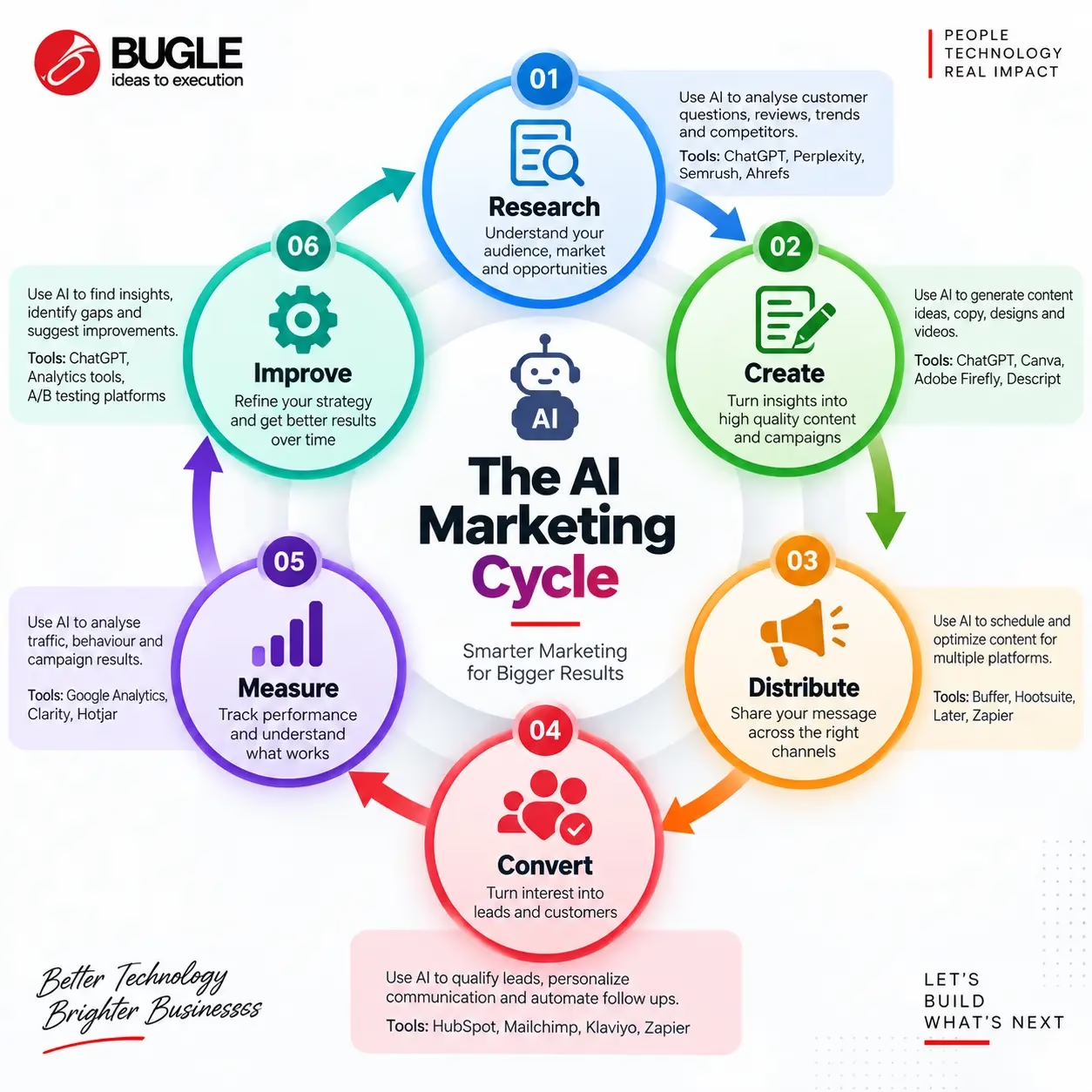
Before creating content, you need to understand your customer’s questions, concerns and buying motivations.
ChatGPT and Perplexity can help analyse customer reviews, sales notes, survey answers and competitor websites. Perplexity is especially helpful for external research because it presents sources alongside its findings. Its marketing tools support competitor analysis, customer-sentiment research and campaign planning. See Perplexity for Marketing.
Here is a use case
Imagine that you operate a dental clinic. You collect 100 Google reviews from your clinic and nearby competitors. Ask AI to categorize them into:
- Reasons people selected a dentist
- Common fears and objections
- Complaints about previous experiences
- Services customers mention most frequently
- Words people use to describe a good experience
You may discover that patients talk more about fear, waiting time and transparency than about clinical technology. That insight can improve your website, advertisements and consultation process.
Example prompt
Analyse these customer reviews. Identify the five most common problems, five buying motivations, exact phrases customers frequently use and three marketing opportunities. Separate facts from assumptions.
Always remove personal or confidential information before uploading customer data.
Best tools: ChatGPT and Perplexity.
2. Turn a Rough Idea into a Marketing Campaign
A business owner often has an idea but not a complete campaign.
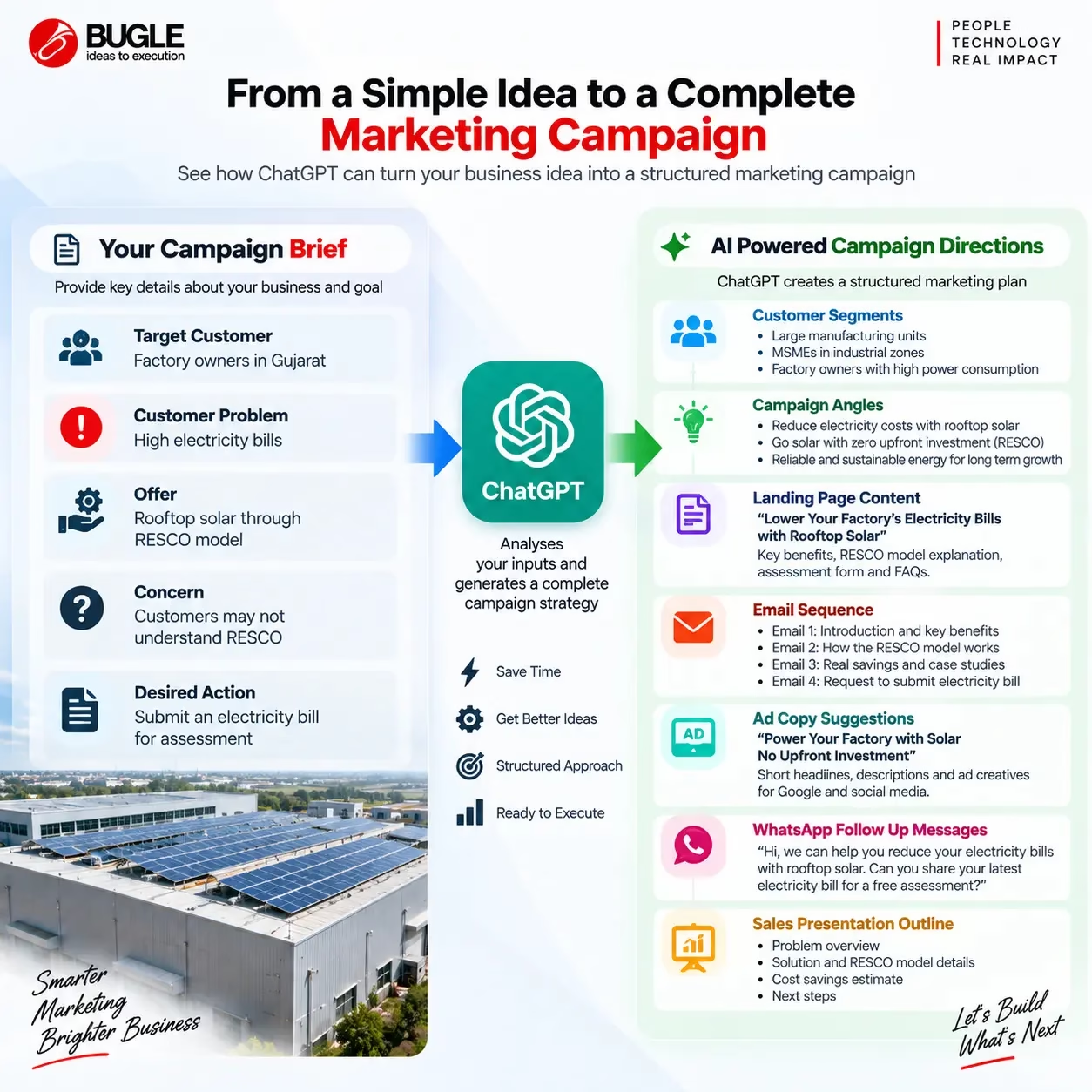
ChatGPT can turn a basic offer into customer segments, campaign angles, landing-page content, email sequences and advertising concepts. OpenAI describes ChatGPT as a marketing workspace for bringing customer research, strategy and campaign creation together. Explore ChatGPT for marketing.
For example
Suppose a solar company wants to promote rooftop solar for factories.
Instead of asking AI to “write an ad,” provide:
- Target customer: factory owners in Gujarat
- Customer problem: high electricity bills
- Offer: rooftop solar through a RESCO model
- Concern: customers may not understand RESCO
- Desired action: submit an electricity bill for assessment
AI can then create separate messaging for awareness advertisements, a landing page, WhatsApp follow-ups and a sales presentation.
Important: Treat the first output as a strategic draft. Your team should verify technical claims, costs, regulations and savings before publication.
- Best tool: ChatGPT.
3. Find Topics People Are Already Searching For
Publishing random articles rarely creates sustainable traffic. SEO tools help businesses discover the questions and keywords people are actually searching for.
Semrush and Ahrefs can identify:
- Relevant keywords
- Competitor rankings
- Frequently asked questions
- Content gaps
- Backlink opportunities
- Pages losing traffic
Semrush also offers AI-assisted content planning and optimization, while Ahrefs provides keyword, competitor and AI-visibility research. Explore Semrush’s Content Toolkit and Ahrefs Brand Radar.
Here is a use case
A furniture-board supplier wants to write about MDF.
Instead of publishing one broad article titled “What Is MDF?”, keyword research may uncover specific needs:
- MDF versus plywood for wardrobes
- Best board for kitchen cabinets
- Moisture-resistant MDF applications
- MDF thickness for furniture
- Which board holds screws better?
Each question can become a helpful article targeting a clear search intention.
Best tools: Semrush or Ahrefs for research; ChatGPT for organizing the findings.
4. Improve an Article Without Stuffing It with Keywords
Once a topic is selected, Surfer SEO can compare your draft with pages already ranking for that search.
Its Content Editor analyses topic coverage, structure, entities, word count and related terms. It can also recommend missing sections and internal-linking opportunities. Explore Surfer Content Editor.
For example:
You have written an article about dental implants, but the top-ranking pages also answer questions about:
- Candidate suitability
- Healing time
- Implant alternatives
- Financing
- Aftercare
- Consultation process
Surfer may reveal these topical gaps.
This does not mean copying competitors or inserting every suggested keyword. Use the recommendations to make the article more complete and helpful.
Best tool: Surfer SEO.
5. Convert One Article into a Week of Content
A well-researched article should not be used only once.
ChatGPT, Jasper and Copy.ai can repurpose one long article into content for different channels. Jasper is particularly useful when a larger marketing team needs consistent brand voice and coordinated campaign assets. Explore Jasper Campaigns.
Here is a use case
One 1,500-word article can become:
| Channel | Repurposed content |
|---|---|
| A professional insight post | |
| A six-slide carousel | |
| YouTube or Reels | Three short video scripts |
| A concise newsletter | |
| Google Business Profile | A local update |
| Sales team | A one-page customer explainer |
| Website | Three FAQs added to a service page |
Ask AI to adapt the idea for each platform instead of merely shortening the same text.
Best tools: ChatGPT for most businesses; Jasper for larger content teams.
6. Create Marketing Designs Without Starting from Zero
Canva’s AI features can help create presentations, advertisements, social posts and campaign variations. Adobe Firefly can generate and edit images, video, audio and visual concepts. Explore Canva Magic Studio and Adobe Firefly.
For example
A real-estate agent needs:
- An Instagram property post
- A vertical Story
- A LinkedIn announcement
- A WhatsApp graphic
- A printable flyer
Create the main design in Canva, apply brand colours and then adapt it to different sizes. AI can suggest layouts and initial copy, while the marketer checks property details, logo placement and contact information.
Do not publish AI-generated product or property images that could mislead customers. Use AI for layout, backgrounds and concepts—not to invent features that do not exist.
Best tool: Canva for everyday marketing; Adobe Firefly for advanced creative work.
7. Turn a Long Video into Short Social Clips
Descript allows users to edit video by editing its transcript. It can also help remove filler words, add captions and extract shorter clips. AI video platforms such as HeyGen and Synthesia can create presenter-style or multilingual videos.
Here is a use case
A business owner records a 20-minute interview explaining a service.
AI can help turn it into:
- Three short Reels
- A captioned LinkedIn video
- A YouTube summary
- A blog transcript
- Five quote graphics
- An email containing the key lessons
This is far more practical than recording separate content for every platform.
Real founders, employees and customers usually create more trust than an AI avatar. Use avatars mainly for explainers, training and localization.
Best tools: Descript for editing; HeyGen or Synthesia for avatar and multilingual videos.
8. Maintain a Consistent Social-Media Schedule
Buffer and Hootsuite combine planning, scheduling and AI-assisted content creation.
For example
Every Monday, a marketing manager can give AI:
- One recent blog
- One customer question
- One company update
- One service to promote
AI drafts a week of posts. The manager then edits the posts, adds genuine photos and schedules them.
This saves time without turning the company’s social feed into generic automated content.
Best tools: Buffer for a straightforward workflow; Hootsuite for larger teams and multiple accounts.
9. Personalize Email Marketing
Mailchimp can assist with email content, send-time recommendations, customer journeys and campaign repurposing. Klaviyo is particularly useful for ecommerce businesses that want behaviour-based email and SMS marketing. Explore Mailchimp’s AI features and Klaviyo AI.
Here is a use case
Instead of sending the same email to everyone, a business can create different messages for:
- New subscribers
- Customers who requested a quote
- Customers who did not complete a purchase
- Previous customers
- Subscribers who have stopped opening emails
AI helps produce variations, but the real value comes from sending the right message based on customer behaviour.
Best tools: Mailchimp for general small-business marketing; Klaviyo for ecommerce.
10. Make Sure Every Lead Receives a Follow-Up
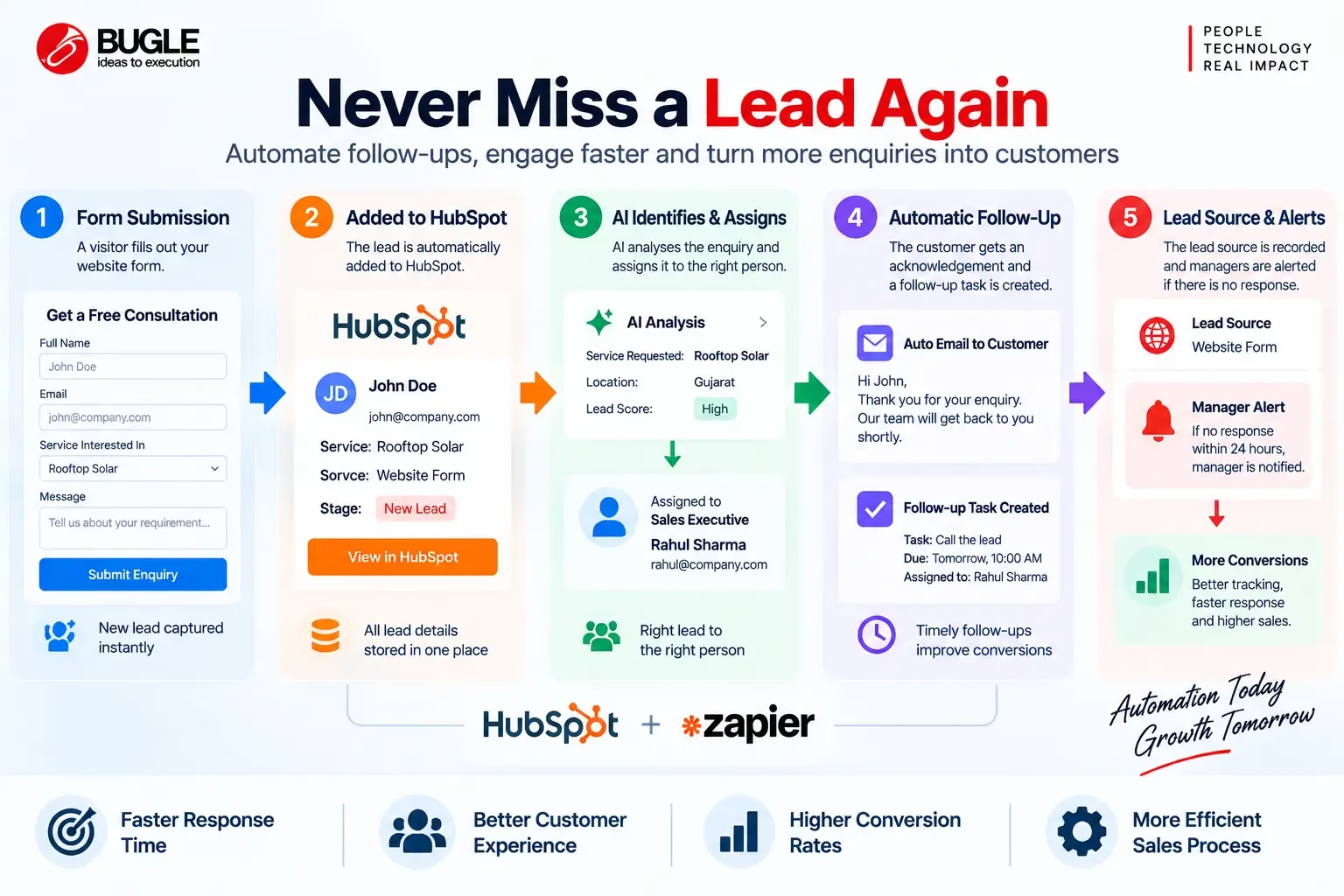
HubSpot can store enquiries, track conversations and manage sales opportunities. Zapier or Make can connect website forms, email, spreadsheets, CRM systems and internal notifications. Explore HubSpot’s AI capabilities and Zapier marketing automation.
For example
When someone submits a website form:
- The lead is added to HubSpot.
- AI identifies the service requested.
- The appropriate salesperson receives a notification.
- The customer receives an acknowledgement.
- A follow-up task is created.
- The lead source is recorded.
- A manager is alerted if nobody responds.
This is one of the most valuable uses of AI marketing automation because it improves an existing business process.
11. Understand Why Visitors Leave Your Website
Google Analytics shows where visitors come from and which actions they complete. Microsoft Clarity provides heatmaps and session recordings. Hotjar combines behaviour analysis with feedback and can use AI to analyse survey responses. Read about Hotjar’s AI survey analysis.
Here is a use case
A landing page receives 2,000 visits but generates only five enquiries.
Session recordings may reveal that:
- The form is too far down the mobile page.
- Visitors repeatedly click a non-clickable image.
- The page loads slowly.
- Users abandon the page near pricing information.
- AI-powered automation
AI can summarize common behaviours, but your team must decide which change to test.
Best tools: Google Analytics plus Microsoft Clarity or Hotjar.
12. Build a Small AI Stack Before Buying Everything
Most small businesses do not need 15 AI subscriptions.
| Business need | Simple starting tool |
|---|---|
| Research, strategy and writing | ChatGPT |
| SEO research | Semrush or Ahrefs |
| Design | Canva |
| Social scheduling | Buffer |
| Email marketing | Mailchimp |
| Lead management | HubSpot |
| Automation | Zapier or Make |
| Website analysis | Google Analytics and Clarity |
Start with one measurable problem.
For example: “Website leads are not receiving follow-ups within 30 minutes.”
Solve that problem first. Then move to the next bottleneck.
Final Thoughts
AI will not rescue a weak offer, unclear positioning or poor customer experience. But it can help a good business understand customers faster, communicate more consistently and remove repetitive work from its marketing process.
The objective should not be to produce more content simply because AI makes it possible.
The objective should be to create more useful communication, generate better-qualified leads and convert more opportunities into customers.
At Bugle, we explore how businesses can combine AI, automation, data and digital marketing to create practical growth systems. The best place to begin is not with a tool—it is with a real business problem worth solving.
Frequently Asked Questions About AI Tools for Marketing
AI tools for marketing help businesses automate repetitive tasks, analyze customer behavior, create content, conduct research, and improve campaigns.
They can support areas such as SEO, social media, email marketing, lead management, and analytics.
AI can help marketers understand customers, generate content ideas, optimize campaigns, personalize communication, and analyze marketing performance.
It can also automate repetitive workflows and improve the speed of everyday marketing tasks.
The right tool depends on the marketing task and business requirements.
Popular options discussed in this guide include ChatGPT, Perplexity, Semrush, Ahrefs, Canva, HubSpot, Mailchimp, Buffer, and Zapier.
Yes. AI supported SEO tools can help identify keywords, analyze competitors, discover content gaps, and improve topical coverage.
Tools such as Semrush, Ahrefs, and Surfer SEO can support different stages of the SEO workflow.
Yes. Small businesses can use AI to reduce repetitive work and improve marketing efficiency without building a large marketing team.
Common applications include content creation, social media planning, email marketing, lead follow up, and website analysis.
AI can connect different marketing processes so that actions happen automatically based on defined triggers.
For example, a website enquiry can be added to a CRM, assigned to a salesperson, followed up, and tracked automatically.
Yes. AI can help create first drafts for articles, social posts, emails, advertisements, video scripts, and other marketing materials.
Human review is still important to verify accuracy, brand messaging, originality, and customer relevance.
No. AI is most effective when it supports marketers rather than replacing human judgment.
Businesses should review AI generated content, verify important claims, protect customer information, and make final strategic decisions.
Start with one measurable marketing problem instead of adopting many tools at once.
For example, a business could begin by improving lead follow up, content production, SEO research, or campaign reporting before expanding its AI marketing stack.
Yes. AI can help identify, organize, qualify, and follow up with leads when connected to suitable CRM and automation systems.
The article’s example shows how form submissions can move through CRM assignment, follow up, source tracking, and management alerts.