
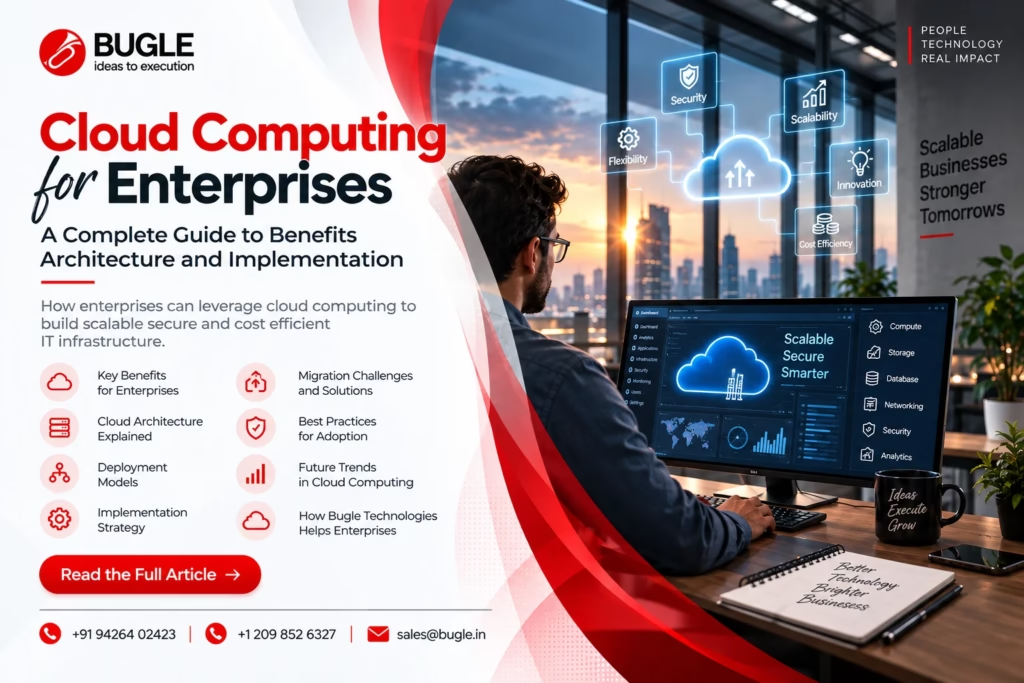
Cloud computing for enterprises has become a critical foundation for modern business operations in 2026. Organizations are rapidly shifting from traditional on premise infrastructure to cloud based systems to improve scalability, flexibility and performance.
With increasing data volumes and digital transformation demands enterprises require infrastructure that can scale efficiently while maintaining security and cost effectiveness. Cloud computing enables businesses to access computing resources on demand without heavy upfront investment in hardware.
Cloud computing for enterprises allows organizations to innovate faster, deploy applications globally and optimize operational efficiency. As businesses compete in a data driven environment cloud technology plays a central role in enabling growth and long term sustainability.
What is Cloud Computing for Enterprises
Cloud computing for enterprises refers to the use of cloud based platforms to store, manage and process data instead of relying on local servers or infrastructure.
Enterprises can choose different cloud service models based on their requirements
- Infrastructure as a Service provides virtualized computing resources
- Platform as a Service offers development environments
- Software as a Service delivers applications over the internet
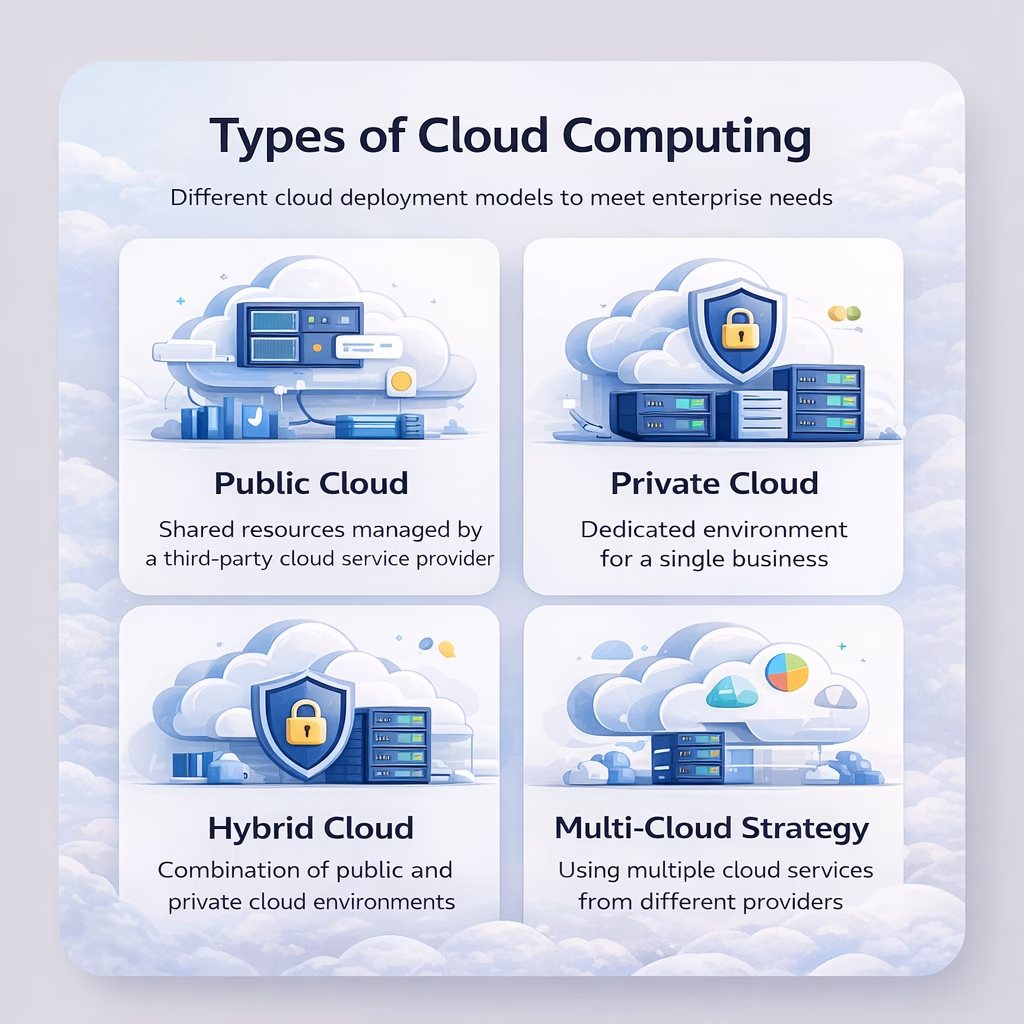
Cloud computing for enterprises also includes deployment models such as public cloud, private cloud and hybrid cloud which provide flexibility based on business needs.
Why Enterprises are Adopting Cloud Computing
Enterprises are adopting cloud computing to improve business performance and operational efficiency
- Cloud platforms allow businesses to scale resources instantly based on demand which is essential for handling fluctuating workloads
- Cost optimization is another major factor as enterprises can reduce infrastructure and maintenance expenses
- Cloud computing for enterprises also supports remote work environments enabling teams to access systems from anywhere
It also accelerates innovation by allowing faster deployment of applications and services
Key Benefits of Cloud Computing for Enterprises
Cloud computing for enterprises provides several strategic advantages
- Improved scalability allowing businesses to grow without infrastructure limitations
- Cost efficiency by reducing hardware and maintenance costs
- High availability ensuring minimal downtime and reliable performance
- Enhanced security through advanced cloud provider protocols
- Business agility enabling faster decision making and deployment
Cloud Computing Architecture Explained
Cloud computing architecture consists of multiple components working together
- Frontend includes user interfaces and applications
- Backend includes servers storage and databases
- Networking enables communication between systems
- Security layers protect data and access
Cloud computing for enterprises uses service models such as IaaS PaaS and SaaS to deliver scalable solutions
Types of Cloud Deployment Models
Enterprises can choose from different deployment models
- Public cloud provides shared infrastructure managed by providers
- Private cloud offers dedicated infrastructure for a single organization
- Hybrid cloud combines both public and private environments
- Multi cloud uses multiple cloud providers for flexibility and risk management
Step by Step Cloud Implementation Strategy
Step 1: Identify business requirements and goals
Step 2: Evaluate cloud providers and services
Step 3: Plan a cloud migration strategy
Step 4: Migrate data and applications securely
Step 5: Test performance and optimize systems
Step 6: Monitor and scale infrastructure continuously
Cloud Migration Challenges and Solutions
- Data security concerns require strong encryption and compliance measures
- Integration complexity arises when connecting cloud systems with legacy infrastructure
- Cost management needs proper monitoring to avoid overspending
- Downtime risks during migration must be minimized with proper planning
Best Practices for Enterprise Cloud Adoption
Enterprises should follow best practices to ensure successful cloud implementation
- Implement strong security frameworks
- Continuously monitor system performance
- Optimize cloud costs using usage tracking
- Choose the right architecture based on business needs
Future Trends in Cloud Computing for Enterprises
Cloud computing for enterprises will continue to evolve with emerging technologies
- Integration of artificial intelligence with cloud systems
- Growth of serverless computing models
- Expansion of edge computing for real time processing
- Automation of cloud operations for efficiency
How Bugle Technologies Helps Enterprises with Cloud Solutions
Bugle Technologies provides end to end cloud solutions for enterprises
- Cloud consulting and strategy planning
- Cloud migration and deployment services
- Data pipeline development and infrastructure setup
- Integration of AI solutions with cloud platforms
Cloud computing for enterprises uses cloud platforms to manage applications, data, and IT infrastructure. It reduces reliance on physical infrastructure and provides scalable computing resources based on business needs.
It provides scalability, cost optimization, high availability, flexibility, and faster application deployment. It can also support data analytics, remote operations, and broader digital transformation initiatives.
A hybrid cloud combines public cloud services with private cloud or on premise infrastructure. It gives enterprises flexibility while allowing greater control over workloads that require specific security or compliance measures.
Enterprises can begin by assessing workloads, selecting suitable cloud services, and developing a migration strategy. They can then migrate data and applications in stages, test performance, and continuously optimize the environment.
Cloud computing can provide strong security capabilities, but security is a shared responsibility between the provider and the enterprise. Businesses must properly configure services, manage access, protect data, and follow applicable security and compliance requirements.
Cloud implementation costs depend on computing resources, storage, applications, migration complexity, security, and service usage. Enterprises should monitor usage and optimize resources to control ongoing cloud expenses.
Conclusion
Cloud computing for enterprises is a key driver of innovation scalability and efficiency in 2026. Businesses that adopt cloud technologies can improve performance, reduce costs and stay competitive in a rapidly evolving digital landscape.
Enterprises that invest in the right cloud strategy and infrastructure will be better positioned for long term growth and technological advancement