
Introduction to Enterprise AI Adoption
Enterprise AI adoption is no longer limited to large technology firms. Businesses across industries are integrating artificial intelligence to improve efficiency, reduce costs, and enhance decision making.
For business leaders, the challenge is not whether to adopt AI, but how to implement it strategically. A structured approach to enterprise AI adoption ensures long term success while minimizing operational risks.
Why Enterprise AI Adoption Is Critical for Business Growth
Companies that invest in AI driven business transformation gain a significant competitive advantage. According to McKinsey & Company, AI adoption can significantly improve productivity and business performance.
- Enterprise AI adoption enables organizations to:
- Automate repetitive processes
- Improve customer experiences through personalization
- Generate actionable insights from data
- Increase operational efficiency
Key Challenges in Enterprise AI Adoption
- Despite its benefits, enterprise AI adoption comes with challenges:
- Lack of quality data
- Integration with legacy systems
- Shortage of skilled AI professionals
- High implementation costs
- Understanding these barriers helps organizations plan effectively and avoid costly mistakes.
10 Strategic Steps for Successful Enterprise AI Adoption
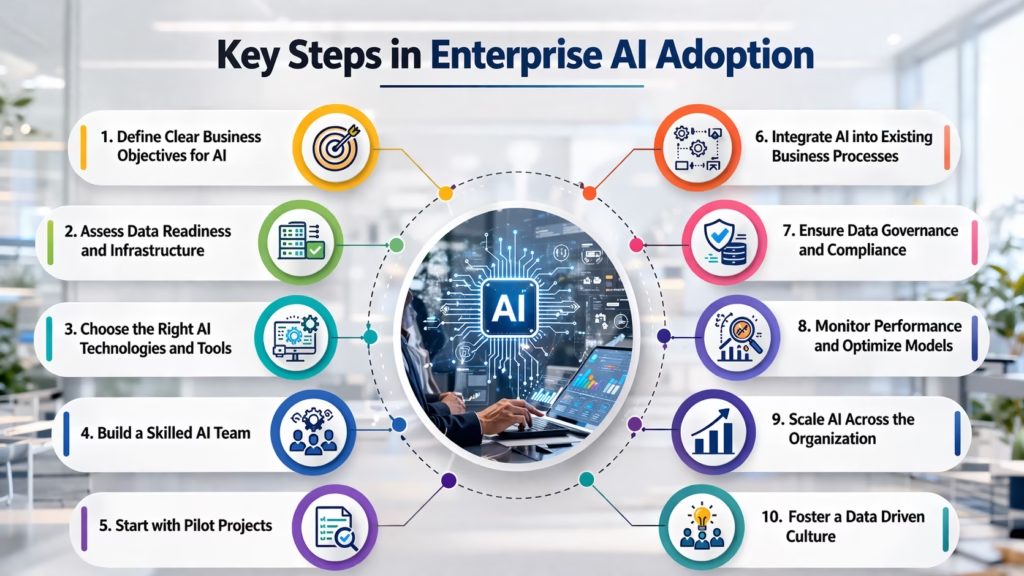
Step 1: Define Clear Business Objectives for Enterprise AI Adoption
- Start by identifying specific business problems AI can solve. Avoid adopting AI for the sake of technology.
- Examples:
- Improving customer support response time
- Automating data analysis
- Enhancing product recommendations
Step 2: Assess Data Readiness and Infrastructure
- AI systems depend on high quality data. Businesses must evaluate:
- Data availability
- Data accuracy
- Storage and processing capabilities
- Without a strong data foundation, AI implementation will not deliver expected results.
Step 3: Choose the Right AI Technologies and Tools
- Selecting the right tools is critical for enterprise AI strategy.
- Consider:
- Machine learning platforms
- Cloud based AI services
- Automation tools
- According to IBM, choosing scalable AI platforms improves long term implementation success.
Step 4: Build a Skilled AI Team
- Successful enterprise AI adoption requires skilled professionals including:
- Data scientists
- AI engineers
- Business analysts
Step 5: Start with Pilot Projects
- Begin with small scale AI projects to test feasibility and measure impact.
- Benefits:
- Reduced risk
- Faster learning
- Clear ROI evaluation
- Pilot projects help refine your AI implementation strategy before scaling.
Step 6: Integrate AI into Existing Business Processes
- AI should enhance existing workflows rather than disrupt them.
- Focus on:
- Seamless integration
- Process optimization
- Employee adoption
Step 7: Ensure Data Governance and Compliance
- With increasing regulations, businesses must prioritize:
- Data privacy
- Security standards
- Compliance with legal frameworks
- According to Gartner, strong data governance is essential for successful AI adoption.
Step 8: Monitor Performance and Optimize Models
- AI systems require continuous monitoring and improvement.
- Key metrics:
- Accuracy
- Efficiency
- ROI
- Regular optimization ensures long term effectiveness.
Step 9: Scale Enterprise AI Adoption Across the Organization
- Once initial success is achieved, expand AI implementation across departments.
- Examples:
- Marketing automation
- Sales forecasting
- Supply chain optimization
Step 10: Foster a Data Driven Culture
- Technology alone is not enough. Organizations must build a culture that supports AI adoption.
- Training employees
- Encouraging data driven decisions
- Promoting innovation
Role of Technology Partners in Enterprise AI Adoption
Partnering with the right technology provider simplifies implementation and reduces risks.
Bugle Technologies supports businesses with:
- AI strategy consulting
- Technology implementation
- Skilled resource hiring
Industry Use Cases of Enterprise AI Adoption
- Enterprise AI adoption is transforming multiple industries:
- Healthcare for diagnostics and patient care
- Finance for fraud detection and risk analysis
- Retail for personalized recommendations
- Energy sector like Akuntha Projects for predictive maintenance
Future Trends in Enterprise AI for Businesses
- Key trends shaping enterprise AI include:
- Generative AI applications
- AI powered automation
- Edge computing
- Real time data processing
- These trends will continue to redefine business operations in the coming years.
Choosing the Right Technology Partner for AI Implementation
- Selecting the right partner is critical for successful enterprise AI adoption.
- Consider:
- Technical expertise
- Industry experience
- Scalability of solutions
- Support and maintenance
- A reliable partner ensures smooth implementation and long term success.
Frequently Asked Questions
Enterprise AI adoption refers to the integration of artificial intelligence technologies into business operations to improve efficiency, decision making, and performance.
It helps businesses automate processes, reduce costs, and gain insights from data, leading to better decision making and competitive advantage.
Challenges include data quality issues, integration complexity, lack of skilled professionals, and high implementation costs.
Businesses should begin with clear objectives, assess data readiness, and start with pilot projects before scaling.
Industries such as healthcare, finance, retail, manufacturing, and energy benefit significantly from AI adoption.
The timeline depends on project complexity, but pilot projects can take a few months, while full scale implementation may take longer.
Conclusion
Enterprise AI adoption is a critical step for businesses aiming to stay competitive in 2026 and beyond. By following a structured approach and leveraging the right technology and expertise, organizations can unlock the full potential of artificial intelligence.
Strategic planning, continuous optimization, and the right partnerships are key to successful AI driven transformation.