
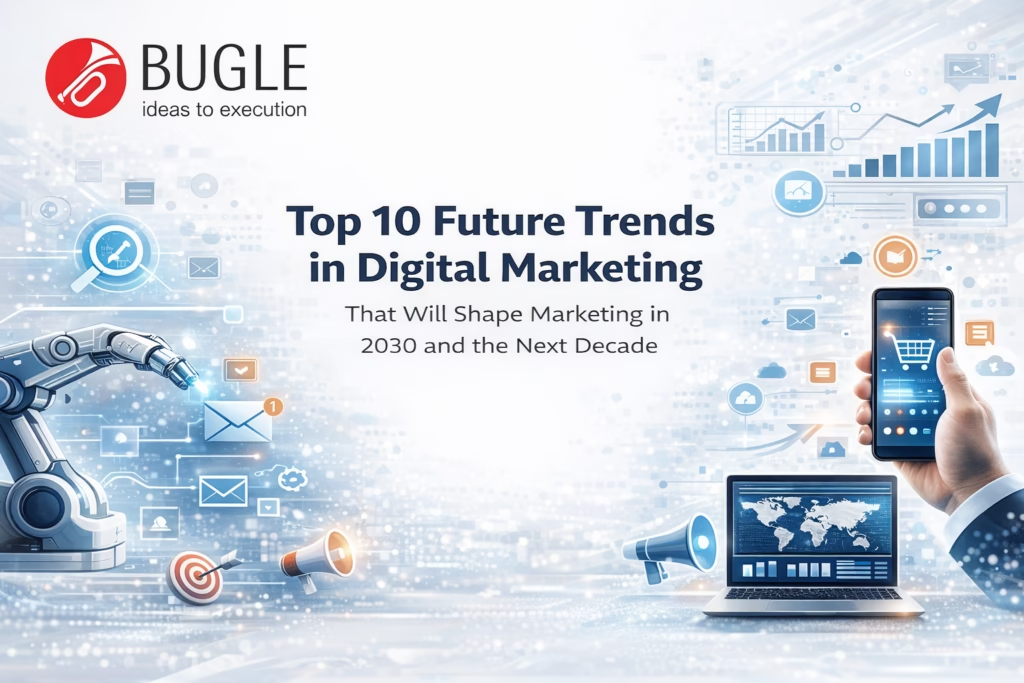
Digital marketing trends are evolving at a rapid pace driven by technology, data, and changing consumer behavior. Businesses that fail to adapt risk losing visibility, engagement, and market share.
Understanding future trends in digital marketing allows companies to stay competitive, improve customer experiences, and build scalable growth strategies. This guide explores the most impactful trends that will shape marketing in 2030 and beyond.
Why Businesses Must Adapt to Emerging Digital Marketing Trends
Modern consumers expect personalized, fast, and seamless digital experiences. Traditional marketing approaches are no longer sufficient.
- Key drivers of change include:
- Rapid adoption of artificial intelligence
- Increasing data availability
- Shift toward privacy focused ecosystems
- Growth of mobile and voice based interactions
- Adapting to these changes ensures long term relevance and performance.
Trend 1: Artificial Intelligence in Digital Marketing
Artificial intelligence is transforming how businesses analyze data, automate campaigns, and personalize customer experiences.
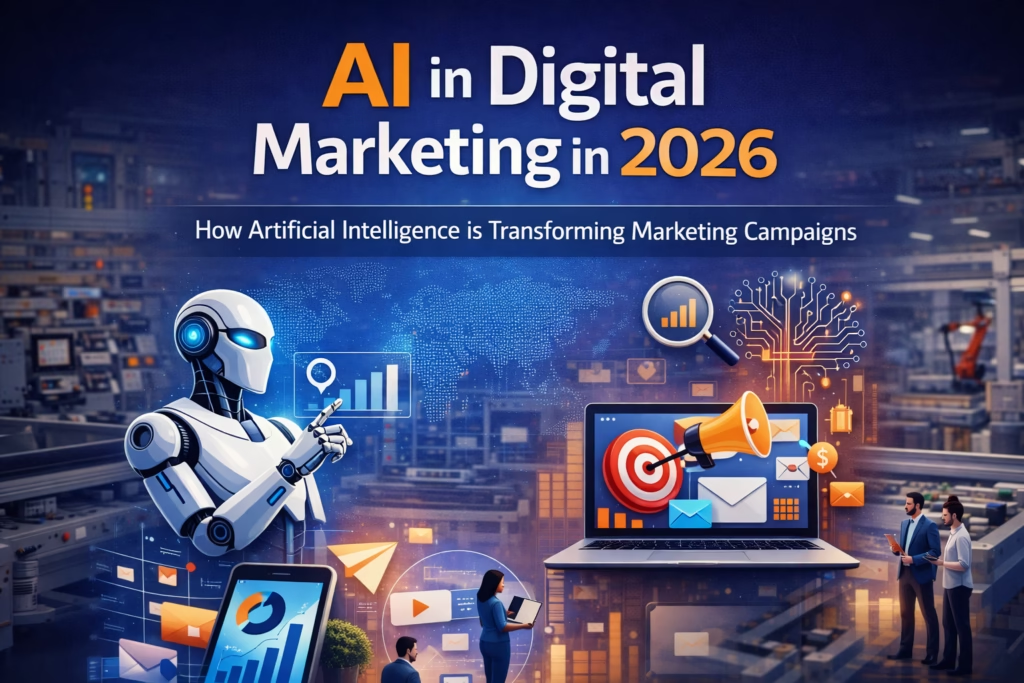
- AI enables:
- Predictive analytics for better targeting
- Automated content generation
- Chatbots for real time engagement
- Smart bidding in advertising platforms
- According to McKinsey & Company, companies leveraging AI in marketing see significant improvements in efficiency and ROI.
Trend 2: Hyper Personalization and Customer Experience
- Personalization is evolving from basic segmentation to real time individualized experiences.
- Businesses are using data to deliver:
- Personalized product recommendations
- Dynamic website content
- Targeted email campaigns
- This approach improves engagement and conversion rates.
Trend 3: Voice Search and Conversational Marketing
- Voice search is growing with the rise of smart devices and assistants.
- Optimizing for voice search requires:
- Natural language keywords
- Question based content
- Local SEO optimization
- Conversational marketing through chatbots and messaging platforms also enhances user experience.
Trend 4: Video Marketing and Short Form Content Dominance
- Video content continues to dominate digital platforms. Short form videos are especially effective in capturing user attention.
- Key strategies include:
- Educational and informative videos
- Short form social media content
- Live streaming Promotion / Video Promotion
Trend 5: Data Driven Marketing and Predictive Analytics
- Data driven marketing enables businesses to make informed decisions based on real time insights.
- Benefits include:
- Improved targeting accuracy
- Better campaign performance tracking
- Predictive customer behavior analysis
Trend 6: Marketing Automation and Smart Workflows
- Automation tools streamline repetitive tasks and improve efficiency
- Common applications:
- Email marketing automation
- Lead nurturing workflows
- Customer journey mapping
- According to HubSpot, automation significantly increases lead conversion rates.
Branding Investments That Deliver the Highest ROI
Trend 7: Influencer Marketing Evolution
- Influencer marketing is shifting toward authenticity and niche audiences.
- Future focus areas:
- Micro and nano influencers
- Long term brand collaborations
- Performance based partnerships
Trend 8: Omnichannel Marketing Strategies
- Consumers interact with brands across multiple channels. Omnichannel marketing ensures a consistent experience.
- Channels include:
- Social media
- Websites
- Mobile apps
- Integrating these channels improves customer engagement and retention.
Trend 9: Privacy First Marketing and Data Protection
- With increasing regulations, businesses must prioritize data privacy.
- Key practices:
- Transparent data collection
- Consent based marketing
- Secure data storage
- Privacy focused strategies build trust and long term customer relationships.
Trend 10: Web3 and Decentralized Marketing
- Web3 introduces decentralized platforms and blockchain based interactions.
- Potential impacts:
- Greater data ownership for users
- New advertising models
- Enhanced transparency
How Businesses Can Prepare for Future Marketing Trends
- To stay competitive, companies should:
- Invest in advanced marketing technologies
- Focus on data driven decision making
- Build flexible marketing strategies
- Continuously upskill teams
Role of Digital Marketing Agencies in Future Growth
Partnering with an experienced agency helps businesses adapt to evolving trends efficiently.
Bugle Technologies provides digital marketing services tailored to modern business needs, including:
- SEO and content marketing
- Performance marketing
- Data driven campaign strategies
- Working with the right agency ensures access to expertise, tools, and scalable marketing solutions.
Frequently Asked Questions
Any business looking to automate, analyze, or scale using data. Future trends in digital marketing refer to emerging technologies and strategies such as AI, automation, personalization, and data driven marketing that will shape how businesses promote their products and services.We work with sectors like healthcare, fintech, logistics, manufacturing, and SaaS.
They help businesses stay competitive, improve customer engagement, and adapt to changing consumer behavior and technology advancements.
AI will automate processes, enhance personalization, improve targeting accuracy, and provide predictive insights for better decision making.
Data enables businesses to understand customer behavior, optimize campaigns, and improve overall marketing performance.
Businesses should invest in technology, adopt data driven strategies, focus on customer experience, and continuously update their marketing skills.
Yes, digital marketing will continue to evolve and remain essential for business growth as more consumers engage online.
Key trends include AI, personalization, automation, video content, privacy focused marketing, and omnichannel strategies.
Conclusion
The future of digital marketing will be shaped by technology, data, and evolving consumer expectations. Businesses that proactively adopt these trends will gain a competitive advantage and achieve sustainable growth.
Staying informed and adaptable is essential to succeed in the rapidly changing digital landscape.