
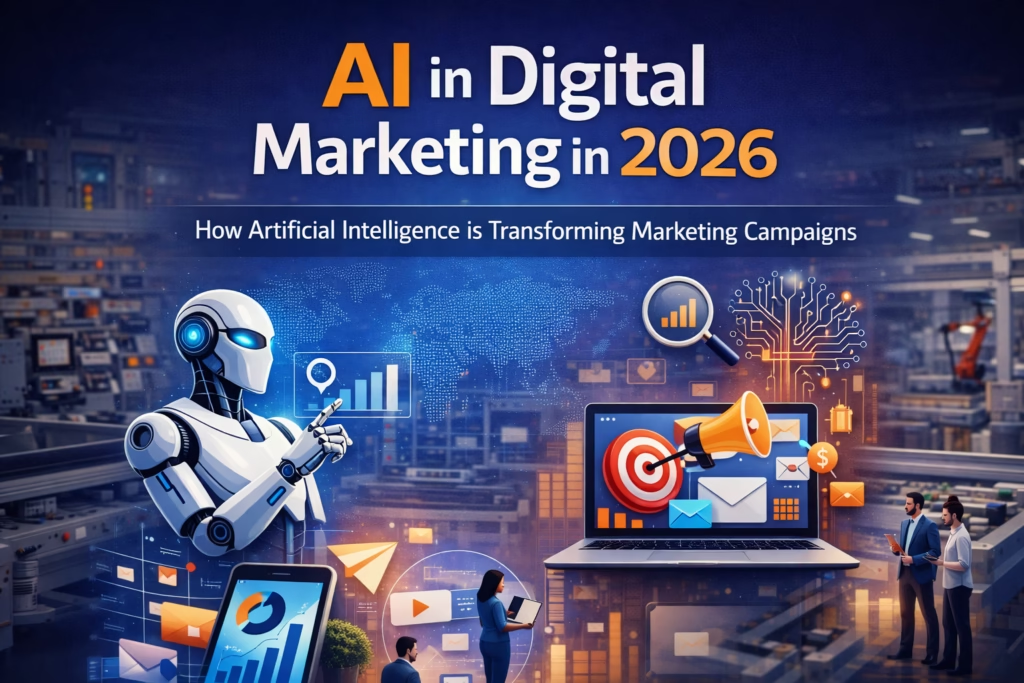
AI in Digital Marketing is transforming how businesses plan execute and optimize their marketing strategies. In 2026 organizations are increasingly using artificial intelligence to automate processes analyze customer behavior and deliver highly personalized experiences at scale.
Traditional marketing approaches are no longer sufficient in a competitive digital landscape where data driven decisions and real time engagement define success. AI automation for businesses is now shifting toward intelligent marketing systems that use machine learning predictive analytics and automation tools.
AI in Digital Marketing enables companies to improve targeting optimize campaigns and increase return on investment by using data insights rather than assumptions. From content creation to customer engagement artificial intelligence is becoming a core part of modern marketing strategies.
What is AI in Digital Marketing
AI in Digital Marketing refers to the use of artificial intelligence technologies such as machine learning, natural language processing and predictive analytics to improve marketing performance and decision making.
It allows businesses to analyze large amounts of data identify patterns and automate marketing tasks that were previously done manually. AI powered systems help marketers understand customer behavior optimize campaigns and deliver personalized content.
Why AI Is Transforming Digital Marketing
AI in Digital Marketing is driving a major shift in how businesses interact with customers and manage campaigns.
Businesses are able to process large volumes of data in real time and use insights to make better decisions. AI also enables hyper personalization where customers receive content recommendations offers and messages tailored to their preferences.
Automation is another key factor. Tasks such as email marketing campaign optimization and customer support can now be handled efficiently using AI systems.
Key AI Technologies Used in Marketing
- Several technologies power AI in Digital Marketing
- Machine learning helps systems learn from data and improve over time
- Natural language processing enables chatbots and content analysis
- Predictive analytics forecasts customer behavior and trends
- AI chatbots improve customer interaction and support
- Recommendation systems deliver personalized product and content suggestions
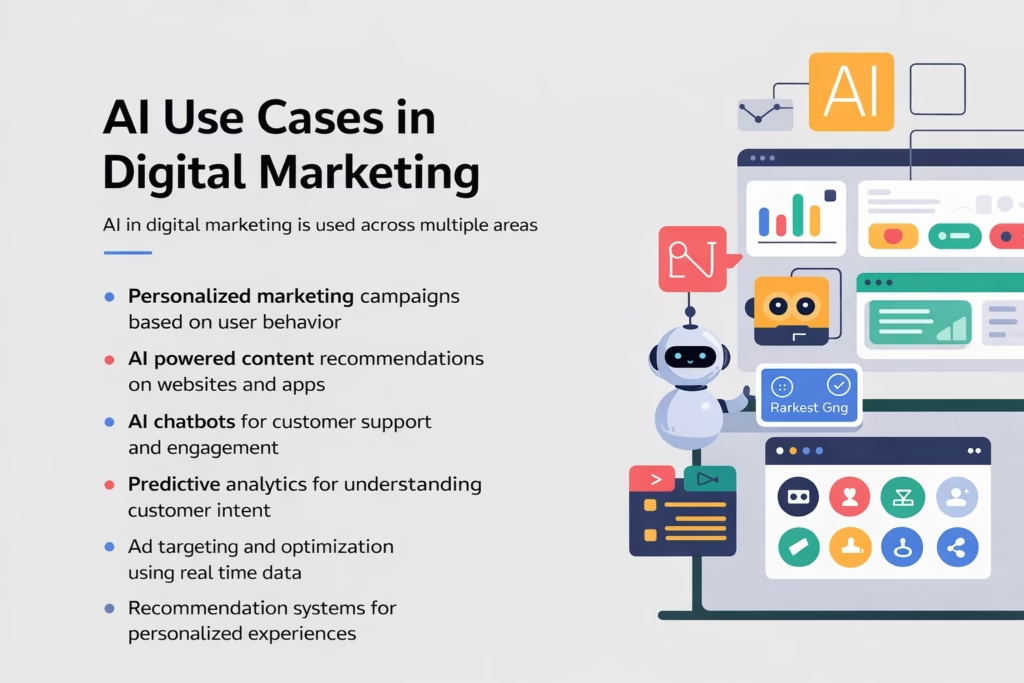
AI Use Cases in Digital Marketing
- AI in Digital Marketing is used across multiple areas
- Personalized marketing campaigns based on user behavior
- AI powered content recommendations on websites and apps
- AI Chatbots for customer support and engagement
- Predictive analytics for understanding customer intent
- Ad targeting and optimization using real time data
AI in SEO and Content Marketing
- AI in Digital Marketing plays a major role in SEO and content strategies
- AI tools help in keyword research and search intent analysis
- Content optimization tools improve readability and ranking potential
- AI can generate content ideas and assist in writing
- Search engines are increasingly using AI to rank content based on relevance and user experience
- AI-powered automation
AI in Paid Advertising and Performance Marketing
- AI is transforming performance Advertising marketing by improving ad efficiency
- Smart bidding strategies automatically adjust bids based on user behavior
- AI helps in audience segmentation for better targeting
- Ad creatives can be optimized using data driven insights
- Campaign performance can be monitored and improved in real time
Step by Step Guide to Implement AI in Marketing
- Step 1: Identify marketing goals and objectives
- Step 2: Collect and organize relevant customer data
- Step 3: Choose suitable AI tools and platforms
- Step 4: Integrate AI into existing marketing systems
- Step 5: Test campaigns and measure performance
- Step 6: Scale successful AI driven strategies
Benefits and Challenges of AI in Digital Marketing
| Benefits of AI in Digital Marketing | Challenges of AI in Marketing |
|---|---|
| Improves efficiency by automating repetitive tasks such as email campaigns ad optimization and customer support | Data privacy concerns as businesses must handle user data responsibly and comply with regulations |
| Enables better audience targeting using data driven insights and behavior analysis | Integration complexity with existing systems and marketing tools |
| Delivers personalized customer experiences based on preferences and interactions | Lack of skilled professionals to manage AI tools and systems |
| Enhances decision making with real time analytics and predictive insights | High initial cost of implementation and infrastructure setup |
| Increases return on investment by optimizing campaigns and reducing wasted spend | Dependence on data quality poor data can lead to inaccurate results |
| Supports scalability allowing businesses to manage large campaigns efficiently | Ethical concerns related to AI usage and decision transparency |
Future of AI in Digital Marketing
The future of AI in Digital Marketing will focus on deeper personalization automation and predictive decision making. Businesses will increasingly rely on AI to create seamless customer journeys and deliver real time engagement.
Technologies such as conversational AI voice search and predictive analytics will continue to evolve and shape marketing strategies.
How Bugle Technologies Helps Businesses with AI Marketing
Bugle Technologies helps businesses adopt AI in Digital Marketing through consulting development and implementation services.
The company provides AI automation solutions predictive analytics chatbot development and data driven marketing systems that help businesses improve efficiency and achieve better results.
Frequently Asked Questions
AI in Digital Marketing refers to the use of artificial intelligence technologies such as machine learning and data analytics to improve marketing performance automate tasks and deliver personalized experiences to customers
AI is used to analyze customer data optimize advertising campaigns personalize content automate email marketing and improve customer engagement through chatbots and recommendation systems
AI improves efficiency enhances targeting enables personalization and helps businesses make better decisions using real time data insights which leads to improved marketing performance and higher return on investment
Common challenges include data privacy concerns high implementation costs integration difficulties and lack of skilled professionals to manage AI systems effectively
Yes, small businesses can use AI through affordable tools such as marketing automation platforms chatbots and analytics tools to improve efficiency and reach their target audience more effectively
AI is not replacing marketers but supporting them by automating repetitive tasks and providing insights so that marketers can focus on strategy creativity and decision making
Examples include Google Ads smart bidding tools HubSpot marketing automation platforms AI based content tools and customer analytics platforms
Businesses should start by identifying use cases collecting and organizing data selecting suitable AI tools and gradually integrating AI into their existing marketing processes
The future of AI in Digital Marketing includes advanced personalization predictive analytics voice search optimization and fully automated marketing systems that improve customer experience and business growth
Conclusion
AI in Digital Marketing is no longer a future concept but a present reality. Businesses that adopt artificial intelligence can improve efficiency deliver better customer experiences and gain a competitive advantage.
Organizations that invest in AI driven marketing strategies today will be better positioned for long term growth in the evolving digital landscape.